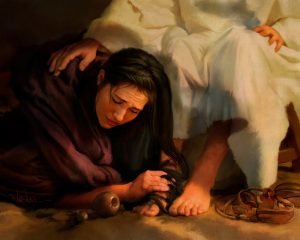
The Spikenard Response: Growing This Holy Week in the Coptic Orthodox Tradition
On the last Friday of Lent, we hear Jesus say, “I wanted to gather your children together, as a hen gathers her brood under her

On the last Friday of Lent, we hear Jesus say, “I wanted to gather your children together, as a hen gathers her brood under her
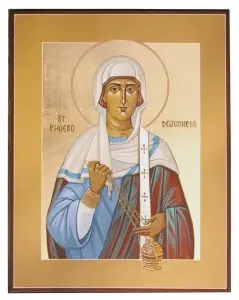
Introduction There are various positions on the role of women in the Church of the New Testament presented by the four Gospels and Pauline writings

As Christianity surfaced, it was adhered to not as a religion other than Judaism but rather as a continuation of Judaism where adherents believed Jesus to be the promised Jewish Messiah whose birth, life, death, and resurrection bring forth salvation to Israel and a light for the Gentile nations. Thus, early Christians, most of whom were of a Jewish descent, welcomed Gentiles to join the fold of God. At the core of the Christian faith is the celebration of the Eucharistic meal, the consecrated bread and wine that become truly and mystically the body and blood of Christ. The struggle then hinged on how Jewish Christians and Gentile Christians can share a single meal without Jewish Christians necessarily breaking their Kashrut laws.

St. Paul teaches us that “we proclaim Christ crucified, a stumbling block to Jews…” (1 Corinthians 1:23). Crucifixion is a stumbling block as the Law proclaims, “anyone hung on a tree is under God’s curse” (Deuteronomy 21:23).

Eastern Christians typically refer to the celebration of the Resurrection as Pascha rather than Easter. The Greek term pascha is derived from the Hebrew pesach meaning Passover. The term Pascha is employed differently across Eastern Christian traditions.

God is love; and in His love, He created the soul, a breath emanating from Him, capable of love not on account of its own being, but on account of the soul’s relation to God, Who is unconditional love. The soul is on the image and likeness of God; it longs for Him; it is drawn to Him and is fulfilled by Him.