Introduction
There are various positions on the role of women in the Church of the New Testament presented by the four Gospels and Pauline writings with subsequent early Churches favouring differing positions. Intrinsic to Oriental Orthodoxy is its cultural diversity across Churches with subcultures in each Church making up the communion. Cultural shifts in these Churches likely influenced Christian thought on various questions including the role of women in Church. In this paper, I will trace the development and cessation of the role of women as deaconesses in the Coptic Orthodox, Syriac Orthodox, and Armenian Apostolic (all of which are members of the Oriental Orthodox communion) as well as the influence of cultural shifts on changing the role of women.
Role of Women in the Early Church
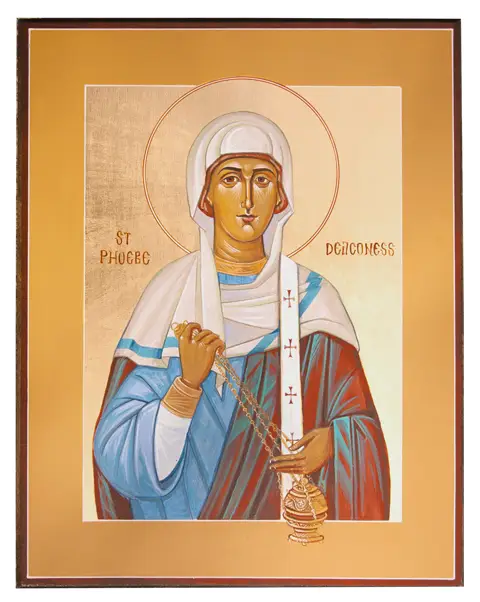
The role of women in the Church is often debated in different communions based on textual analysis of the New Testament. Those opposed to their involvement in the diaconate tend to cite Jesus only selecting twelve male disciples. Their argument does not consider that the first ‘evangelist’ to the Samaritans was the Samaritan woman by the well (John 4) and that the first ‘evangelist’ of the resurrection was Mary Magdalene (John 20). Additionally, Jesus accepted and commended Mary who sat at his feet (Luke 10:38-42), a gesture commonly performed by disciples to rabbis.[1] Luke also mentions the role of women in financially supporting Jesus’ ministry and counts them with the twelve (Luke 8:1-3). The first mention of diakonia as a service within the newly established Church is found in Acts 6. All seven chosen for the diakonia are male. Interestingly, their role was not liturgical but rather philanthropic (preparing tables, supporting widows, etc.) allowing the disciples more time to maintain their liturgical and evangelical role. Nevertheless, the first of these seven, Stephen, ends up preaching anyways—a task not assigned to him as far as Acts indicates. Without specifying the role of the diaconate or its development, Paul entrusts deaconess Phoebe with the task of delivering and likely expounding his letter to the Romans; indicating that a teaching role was normative within the diaconate regardless of gender as early as Paul’s time. The Catholic perspective on Phoebe’s designation as a deaconess differs from its Orthodox counter part. While Pope Benedict XVI understood it to denote being a servant as the title “did not have a specific ministerial value of a hierarchical character,”[2] the Orthodox (Eastern and Oriental), take it to indicate an ordained ecclesial rank. The Orthodox can claim legitimacy of their position in Origen and John Chrysostom’s commentaries on Romans.[3]
The difficulty in establishing a definitive role of the diaconate in general and the role of women in the diaconate in particular stems from multiple aspects: (a) the apostolic silence about the role of the diaconate, (b) the seemingly antagonistic view of women teaching in the Church, and (3) the ostensibly contradictory views of the role of women in the Church within and outside the diaconate. The apostolic silence cannot establish an argument for or against the establishment of a clearly outlined role of women in the diaconate. The seemingly antagonistic and contradictory perceptions of the role of women in Church especially with respect to preaching and teaching stem from Pauline literature. While scholars have argued that 1 Timothy 2:12 not to be authentically Pauline in authorship, Oriental Orthodoxy (as well as Eastern Orthodoxy and Roman Catholicism) continue to uphold these verses as divinely inspired scripture regardless of authorship. In other words, even if it were not Paul who commanded women to be silent and not to teach, the fact this commandment is found in Scripture gives it a binding authority within Oriental Orthodoxy regardless of Pauline authorship. Attempts at synthesizing these scriptural texts took a different form depending on the context and culture of each Oriental Orthodox Church and interpreting theologian. That said, these verses are often taken to indicate that Paul forbids women not from exercising ministry or even teaching, but rather from having a ruling function.[4] If that interpretation is accurate, then this does not present an obstacle for the re-introduction of women to the diaconate in the Oriental Orthodox Church based on the fact that diakonia by its very nature and function is a ministerial role rather than a leadership role.
The first document referring to women deacons as ‘deaconesses’ is the third century Apostolic Teaching. Theodorou describes the finding of this document as follows,
“It presents the deaconesses as gathered in an ecclesial order, which is commemorated along with the orders of bishops, presbyters and deacons… the female diaconate was necessary ‘in multis rebus’ inasmuch as the Lord Himself was ministered to by women. The deacons and the deaconesses have one and the same ministry, the ministry of service the ‘ministerium diaconiae’, and they are as one soul in two bodies ‘duo corpora in una anima’.”[5]
This similarity of function between the male and female diaconates is attested to by Gregory of Nyssa’s remark that his sister Macrina “anointed her hands with her service at the mysteries.”[6] That deaconesses stood with presbyters and deacons around the celebrant bishop is attested to by yet another document The Testament of the Lord dating back to the fourth century. It states that “[w]ithin the veil he [i.e., the bishop] should be offering with the presbyters and the deacons and the canonical widows and the subdeacons and the women deacons and the readers (and) those who have charisms.”[7] Early canons suggest that some deaconesses were married but were forbidden from intercourse. Indeed, some canons obliged wives of bishops, priests, and deacons to separate from their husbands through mutual agreement between the spouses upon his selection an ecclesial office.[8] The extent to which these canons were applied in Churches now designated as Oriental Orthodox, Eastern Orthodox, or Roman Catholic is uncertain.
Deaconesses in the Armenian Apostolic Church[9]
Of the three Oriental Orthodox Churches under examination, the Armenian Church has preserved the role of women in the diaconate the most. Abel Oghlukian’s book The Deaconess in the Armenian Church: A Brief Survey offers insight into the main stages of the development of the role of the deaconess namely: (a) first period (4th-8th century), (b) second period (9th-11th century), (c) third period (12th century), and (d) the revival period (17th century). In the first period, Oghlukian observes that while the deaconesses were present during baptisms, they were forbidden from being beside the priest or “audaciously baptize with them.”[10] Instead, they were expected to stand in their designated spots.[11] In the second period, deaconesses are said to have had the positive role of assisting in the tonsuring of nuns as the latter put on their schema.[12] Comments on the role of women in the diaconate in the twelfth and thirteenth centuries are by no means consistent. For example, Mikht’ar Goš Juducial manual of 1184 and Smbat Constable’s lawbook in 1265 speak positively about the role of deaconesses assisting in baptisms of women though the latter indicates that this role was abandoned by Armenian women.[13] Taking a contrary approach, Archbishop Step’anos Orbēlean in his History of the Province of Siwnik in 1299 restricts the role of deaconesses to preaching in nunneries and reading the gospel from her own corner rather than on the bema. To him, deaconesses ought not approach the service of the sacraments in the manner of their male counterparts.[14] Below, I will survey a sample of views on the role of women in the diaconate written by Armenian clerics who were either canonists or pastors answering inquiries about the subject in question posed to them by fellow clerics or congregants.
The views of Pōghos Tarōnec’i and Tat’evac’i, who limited the role of the female diaconate as much as possible, are worth examining as they shed light on the cultural shifts in Armenian society. Their rulings seem to have been a response to the threat of cultural assimilation imposed on the Armenian Church by Syriac Christians and Catholics. Both Syriac and Armenian Christians had deaconesses in their Churches; and Syriac Christianity had some role to play in the development of Armenian Christianity especially after the Council of Chalcedon.[15] In response to the Syriac custom of deaconesses being in the sanctuary, Tarōnec’i insisted that the Syrian custom ought to be wrong. His arguments included but were not limited to (1) citing Jesus’ transfiguration was only available to three of his male disciples, (2) citing Nicaea’s opposition to women ascending the altar, and (3) citing Pauline authority against women speaking at all and thus women, deaconesses or not, ought not to be on the bema.[16] With respect to Tat’evaci’s response to Catholics in his Book of the Questions, the issue was not particular to deaconesses since their role seldom existed in the western Church and was likely extinct by the twelfth century. The response was addressing the economic permission for lay Catholic women to perform baptisms in the name of the Trinity in cases of dire need. Tat’evac’i’s response offered ten arguments against this Catholic position followed by an answer to another question wherein he admonishes the faithful not to even have a woman as a Godmother.[17] While his arguments affected lay women more than deaconesses, whom he does not mention at all in these writings, his arguments show a level of antagonism toward the role of women aiming to distance Armenian ecclesial culture from its Catholic counterpart which he is writing against.
The revival period of the seventeenth century in Oghlukian’s study suggests that only nuns became deaconesses in the Armenian Church for a long period of time. Mikht’ar Goš Judicial manual in the twelfth century seems to affirm this, indicating that Armenian lay women abandoned the role of the deaconess leaving it to be occasionally filled by nuns. Four centuries later and twenty-three years after Oghlukian’s study outlined the history of the female diaconate,
“[t]he Prelate of the Prelacy of Tehran (under the jurisdiction of the Catholicosate of Cilicia) ordained a young woman as a deaconess in Tehran’s St. Sarkis Mother Church on Sept. 25, 2017… Twenty-four-year-old Ani-Kristi Manvelian, an anesthesiologist by profession, was ordained—along with Mayis Mateosian—by Archbishop Sebouh Sarkissian, Primate of the Prelacy of Tehran.”[18]
It is worth noting that the revival of the role of the deaconess in the world parish as opposed to the nunnery began not in European Armenia nor among immigrants to North America influenced by various waves of feminism. Rather, it re-emerged in Iran where women are largely viewed as oppressed by outdated principles characteristic of radical Islamists. Picture of deaconess Ani-Kristi Manvelian censing beside the altar raised concerns among Armenians and other Orthodox Christians to which Archbishop Sarkissian responded that her ordination is canonical and is aligned with the tradition of the Armenian Church.[19] It does not seem his answer is representative of the tradition as a whole, however, since it contradicts many of the rulings of the twelfth century.
Deaconesses in the Coptic Orthodox Church[20]
As early as Origen of Alexandria in the third century, references to women occupying the ministerial office of the diaconate are found. Origen writes, “This passage [Romans 16:1-2] teaches by apostolic authority that women also are appointed in the ministry of the church, in which Phoebe was placed at the church that is in Canchreae.”[21] Shifts in cultural perception of women and ritual purity in the subsequent century may have impacted the centrality of this role to ecclesial life. Pope Dionysius of Alexandria (d. 265) and Pope Timothy I of Alexandria (d. 384) maintained that a menstruating woman ought not to approach communion and their view was solidified in the canons of the Coptic Orthodox Church in subsequent centuries. It is difficult to determine why they maintained such view[22] especially as their renowned contemporaries such as Basil the Great and John Chrysostom had no issue with menstruating women approaching the chalice. The locality of Dionysius and Timothy’s ruling and their use of references from the Mosaic law to substantiate their position suggests potential Jewish influence, a likely possibility considering the strong Jewish presence in Alexandria.
In subsequent centuries, the school of Alexandria was occupied with the Arian and Trinitarian controversies in the fourth century followed by the Nestorian and Chalcedonian controversies in the fifth century. Thus, there is little to no literature available on church order or ecclesial ranks from that era. The Chalcedonian controversy created a long-lasting schism that initiated the start of a distinctively Coptic rather than Greek or Byzantine expression of Christianity in Egypt. The Chalcedonian controversy followed by the Arab occupation only two centuries later marked two significant cultural shifts in Egypt. Copts were initially left to worship as they wished in the Arab occupation. Fear of assimilating to the culture and language of the Arabs was lurking in the lives of Copts. A prophecy attributed to Samuel the Confessor (d. 695 C.E.) foretold that Copts will eventually renounce the language of their forefathers and succumb to that of their occupiers. Regardless of its historicity, this prophecy demonstrates the Copts’ visceral fear of assimilation. Nonetheless, the prophecy’s details were fulfilled about six centuries later. Through a slow process of assimilation often interluded with periods of oppression and persecution, Copts’ vernacular shifted to Arabic, and they lost their native tongue. By the twelfth century, Pope Gabriel Ibn Tarik (d. 1146 C.E.) permitted the use of Arabic in the liturgy ushering the beginning of the Copto-Arab era where Coptic theologians would write theological treatises in Arabic. The thirteenth century, also known as the golden age of Copto-Arabic theology, offered the Coptic Church theologians, apologists, commentators, and canonists. In one of his canons, Gabriel stated the following, “let the deaconess be honoured among you. She is to say nothing and do nothing except when ordered by the deacon. Let no woman come to the bishop to inquire anything apart from the deaconess.”[23] It is evident that during his time, deaconesses were still active so much that canons were put in place to regulate their role in relation to the laity and Church hierarchy. Abu Al-Safi Ibn Al-Assal (13th century), a canonist, wrote volumes on the order of the Church compiling canons from the Coptic, Byzantine, and even secular books. In the section dedicated to clergy and the order of the Church, he makes no mention of the role of the deaconesses whatsoever.[24] A century later, the liturgical commentator, Ibn Kabar (d. 1324), wrote,
“And some of the sages have said… those who have received the grace of the Spirit were the twelve disciples, the seventy apostles, and the four daughter of Philip, and it was said that they were a hundred and twenty souls. The Holy Spirit through His descent perfected the twelve discipled with the rank of authority and priesthood… And [the Spirit] made Philip’s four daughters prophetesses and deaconesses entrusted with anointing perfect women wishing to be christened with the anointing of baptism.”[25]
It is worth noting here that while he included the women among the deacons and recipients of the Spirit on Pentecost, he did not venture to comment on the role of the diaconate in the Coptic Church. This could be explained in two ways, either the role of the deaconess continued in his time (a possibility for which we have no evidence to confirm or deny) or he found no theological reason for the cessation of their role and thus omitted a justification. After Ibn Kabar, there is no mention of the role of women in the diaconate in the liturgical texts and manuscripts available to us. Contemporary liturgical commentator, Athanasius Al-Maqari, observes that a shift in the liturgical culture of the Coptic Church takes place by the end of the fourteenth century and the beginning of the fifteenth century. This entailed an overall carelessness with regard to the preservation of the rites and orders of the Church as well as taking the liberty of adding to and omitting from liturgical texts. It is around this time as well that references to the role of women in the life of the Coptic Church ceased until the modern era.[26]
A Coptic renaissance began with dawn of the twentieth century. Copts, as well as their Muslims counterparts, had to struggle with the English and French occupations, the benefits and threats of modernity emerging from the West, and the rise of fundamentalist Islamism manifesting mainly in the form of the Muslim brotherhood. One of the visible impacts of this renaissance was the serious attempt at restoring the diaconate in the Coptic Church once more. Habib Guirguis (d. 1951) was the archdeacon assisting Pope Cyril V (d. 1927) and to a lesser extent Pope Youannis XIX (d. 1942). Guirguis was entrusted with the task of re-establishing the Theological Seminary and the inauguration of the Sunday School movement. The former task was largely directed toward the training of bishops, priests, and monks whereas the latter task targeted teaching young children by the private efforts of a select few lay believers. Among them was Nazir Gayed, who would later choose an ecclesial path as a monk, bishop, and eventually ascend the patriarchal throne as Pope Shenouda III (d. 2012). Inspired at a young age by the reforming vision of Guirguis, Shenouda dedicated some of his efforts to the restoration of the diaconate that was somehow not part of Guirguis’ vision of Church reform—an ironic oversight considering that Guirguis was an archdeacon.[27] During the papacy of Shenouda III, more deacons were ordained and had a liturgical function including the administration of the blood from the chalice during communion.[28] When considering the female diaconate, Shenouda had a particular vision. He insisted that they would be virgins or widows as per the early rite of the Church (although initially he consecrated women, including married and widowed ones in 1981. Later, he found that impractical and preferred to consecrate young, energetic, unmarried women who would take the vow of chastity and be fully dedicated to ministry). However, unlike the early rite of the Church, these women had no liturgical function whatsoever. They could attend and help the woman being baptized dress and undress privately but could not anoint her. Instead, the priest was to anoint the adult woman on the forehead, chin, and hands only which is to be contrasted with the typical 36 anointings performed in children’s baptism. The role was—and continues to be—largely philanthropic, providing support to women from lower socioeconomic status, leading meetings for women, or overlooking services of distributing alms to the poor. While their role resembles that of the deacons described in Acts, they were not to be designated as deaconesses but rather as mukarasat (Arabic) meaning ‘consecrated.’ Instead of addressing these consecrated women by the proper title deaconess, they are addressed as tasoni (Coptic) meaning ‘sister.’ The diaconate in the Coptic Church today is divided across gender lines where males overlook the liturgical functions whereas women overlook the philanthropic ones. Chanting in the choir of cantors or reciting liturgical readings whether by mukarasat or lay women was forbidden by an ecclesial synod citing the Pauline admonitions in 1 Corinthians 14:34 and 1 Timothy 2:12.[29] Since Shenouda’s passing in 2012 and the elevation of Pope Tawadrous II, the application of these synodal decrees pertaining to women chanting and reading has been occasionally ignored as outdated especially in the west.
Deaconesses in the Syriac Orthodox Church[30]
In understanding the role of women in the liturgical life of the Syriac Orthodox Church, it is important to note first that “[e]arly Syriac literature contains many links with Jewish tradition that are not, or only rarely, found elsewhere in early Christian tradition…”[31] Furthermore, native Syriac Orthodox lands have been under Islamic occupation since the seventh century like their Coptic neighbours. It is not necessary for a Jewish or a Muslim woman to attend prayers in the house of worship the same way Jewish and Muslim men are. Likewise, both religions strictly prohibit any private participation in religious practices including prayer and scripture reading during ritual impurity, i.e., menstruation. Despite all these external influences, the liturgical role of women remains relatively vast. As Christine Chaillot observers, “There is a prayer of blessing for a deaconess, m’shamshonitho, as well as dedication prayer for the wife of a priest, similar to that of Bath Qyomo or daughters of the Covenant, so that she can assist her husband in some sacraments such as the baptism of women.”[32] The application of these rubrics in the contemporary lives of Syriac Orthodox Christians varies across different dioceses which is to be expected considering the Church’s multi-ethnic jurisdictions which are Syria, Jerusalem, Iraq, and India.
Returning to the liturgical role of women in the writings of Church fathers, Ephrem the Syrian (d. 373 C.E.) established choirs of female singers known as ‘daughters of the covenant.’ In his Hymns on Paradise, Ephrem wrote, “The serpent is cripped and bound by the curse, while Eve’s mouth is sealed with a silence that is beneficial, but she will also serve again as a harp to sing the praises of the Creator.”[33] Though Ephrem does not deny the connection Paul establishes between the silence of women and the temptation of Eve in 1 Timothy 2:12, he attributes to it a temporary character. Ephrem puts an end to this silence by establishing the aforementioned choirs to spread his hymns across the school of Nisibis. Justifying the establishment of these choirs, Jacob of Serug (d. 521 C.E.) said, “Let all the multitude of virgins praise Him with wonder, because the great Saviour shines forth from them to the whole world. Let the voice of the young women be lifted up in praise, because by one of them, behold, hope is brought to the world.”[34] Based on an Eve-Mary typology, Jacob asserts that Eve’s shame that silenced women in the past has been undone by the glory of Mary’s obedience that opened the mouth of female singers.[35] Interestingly, Jacob ignored the Marian element of this typology when defending the Syriac habit of not permitting women in the sanctuary as he says in another homily, “the hand which ate the forbidden fruit in the paradise of Eden is not permitted to hover over the divine offering.”[36] The Marian element of the Eve-Mary typology is used to justify women singing but not to be present in the sanctuary.
John Chrysostom[37] (d. 407 C.E.) presents a unique case as his views on the extent to which women can have power and leadership in Church shifts over time. Before his ordination as bishop of Constantinople, he wrote in his Six Books on the Priesthood,
The divine law indeed has excluded women from the ministry, but they thrust themselves into it. And since they can effect nothing of themselves, they do all through the agency of others. In this way they have become invested with so much power that they can appoint or eject priests at their will.[38]
Nevertheless, Chrysostom would speak highly of Phoebe who was honoured with the designation as Paul’s sister.[39] He also acknowledged that Paul honored the deaconesses in 1 Timothy 3:8-11, “Some say that he (Paul) is talking about women in general, but that cannot be. Why would he want to insert in the middle of what he is saying something about women? But rather, he is speaking of those women who hold the rank of deacon.”[40] After his exile, he used his relationship with deaconess Olympia to pull strings in Constantinople, a tactful maneuver to be contrasted with his remarks in his book On the Priesthood which he wrote before his elevation to the priesthood. David Ford observes that “John trusted Olympia, more than any of his other supporters in Constantinople, to help him continue his attempts to direct certain affairs of the Church, even while he is in exile.”[41] It is unclear whether the shift in Chrysostom’s mindset resulted from the change in his circumstance or from perceiving an exception in deaconess Olympia compared to other women. Chrysostom’s edifying and loving relationship to deaconess Olympia is to be contrasted with his destructive relationship with the empress who was the primary cause for his exile and eventual death. It is likely that Chrysostom’s comments on the role of women in the Church were largely informed by the circumstances that surrounded him.
Severus of Antioch (d. 538 C.E.) invites comparison with Chrysostom in their common monastic backgrounds, their common commitment to educating their congregation through homilies and orations, and their eventual death in exile after their ascension to the patriarchate. Commenting more specifically on the role of women in the diaconate, Severus relates that a common habit was to ordain the abbess of a convent a deaconess so that she could distribute the pre-sanctified eucharistic gifts to the nuns entrusted to her in the absence of a priest or a deacon. With the permission of the bishop, the deaconess was permitted to mix the wine and water in the chalice.[42] It is worth noting here that Severus’ position contradicts that of Jacob of Serug before him and Jacob of Edessa (d. 708) after him who forbade the deaconess from approaching the altar under any circumstances, limiting their role to carrying communion to women and male children under five years of age, assistance in baptism and chrismation of adult women, and visiting sick women. It is important to reflect on the culture that shaped Severus’ thought on the wider role of deaconesses. Apart from letter correspondences between Severus and deaconess Anastasia after the former’s exile in 518,[43] sources do not offer much on this issue. If one were to speculate, it is likely that Severus’ position may have been informed by his antagonism to the council of Chalcedon. In the tumultuous post-Chalcedonian controversy, Severus, as a Miaphysite leader, opposed the council on christological grounds deeming it to be a crypto-Nestorian synod. One of the canonical achievements of the council of Chalcedon was attempting to limit the role of deaconesses in terms of age.[44] It is possible that Severus’ openness to the role of the deaconess among non-Chalcedonians aimed at appearing more progressive, and thus, gaining more followers.[45] However, such hypothesis could not be confirmed with the historical data available on Severus’ life and times. It is worth noting that neither Jacob of Serug nor Jacob of Edessa had particularly strong ties to the Chalcedonian controversy.
Centuries later, Mor Ignatius Zakka I, the late Patriarch of the Syriac Orthodox Church (d. 2014), composed a book titled Women in the Syriac Orthodox Church referencing the above Church fathers. He concluded was that the presence and role of women in all the ranks of the Church—save for the priesthood and bishopric—is foundational to the continuity of the Syriac Orthodox Church. Despite this theoretical reality, women’s role today is often restricted to chanting hymns rather than serving as deaconesses the way they appear to have done in Severus’ times. While Syriac female chanters are often epitaphed deaconesses, they neither have the rank of a deaconess, its honours, nor its duties. This remains the status quo of the role of women in the Syriac Orthodox diaconate today.
Concluding Remarks
The ebbs and flows of the role of the deaconess in Oriental Orthodoxy is largely a local concern shaped by pastoral needs and cultural shifts rather than deep theological reflection. A decrease in the role of women is found in Coptic—and to a lesser degree Syriac—circles can be traced in part to Jewish and Islamic influence. Where Islamic influence is more defined as in the Coptic Church, the role of women diminishes even further to exclude them from chanting as a cantors. The Armenian Church, having the least Jewish and Islamic influence, seem to have the largest capacity for women in the diaconate though it is mostly restricted to nuns. Armenian aversion to Catholic and Syriac enculturation scaled down the role of lay women in the Church. Nevertheless, the Armenian Church today remains the only Oriental Orthodox Church examined above to have revived the liturgical role of the deaconess in the world parish. The revival of the role of deaconesses in the Oriental Orthodox Church requires honest reflections on scripture, church history, and canons pertaining to the role of deaconesses while reflecting on changes in their role in relation to cultural shifts in local churches. To this end, a few questions need to be examined answered honestly: (1) Why has the diaconate been divided across gender lines where women are largely excluded from the sacramental rites of Baptism and Eucharist despite early historical attestations to their inclusion in these functions? (2) How can ritual purity laws be understood in relation to the role of the deaconess on historical, practical, and pastoral levels? (3) Why were deaconesses expected to be virgins or widows whereas the same expectation was not constantly applied to their male counterparts when ascending to the diaconate or priesthood? While these questions are being further examined, Oriental Orthodox Churches ought to make every effort possible to open the doors of service—liturgical or otherwise—to women. Until then, every “woman ought to be able, in full freedom, to make the maximum contribution of her special vocation to the service of the Church (diakonia, religious education, theological reflection in the Church, etc.).”[46]
[1] Jane Coll, Handmaids of the Lord: Women Deacons in the Catholic Church (Gracewing, 2013), 91.
[2] Coll, 93.
[3] Origen, Commentarii in Epistulam ad Romanos. ed. T. Heither (New York: Herder, 1990–1995), 5:242-44; John Chrysostom, Homilies on Romans 30(NPNF 1/11:549-50).
[4] Coll, Handmaids of the Lord: Women Deacons in the Catholic Church, 97.
[5] Evangelos Theodorou, “The Institution of the Deaconesses in the Orthodox Church And the Possibility of Its Restoration” in Gennadios Limouris, ed., The Place of the Woman in the Orthodox Church and the Question of the Ordination of Women (Istanbul, Turkey: Ecumenical Patriarchate – “Tertios” Publications, 1988), 208.
[6] Evangelos Theodorou, “The Institution of the Deaconesses” in Limouris, 223.
[7] Alistair C. Stewart, trans., The Testament of the Lord: Worship and Discipline in the Early Church (Crestwood: Saint Vladimir’s Seminary Press, 2018), 93.
[8] Gary Macy, William Ditewig, and Phyllis Zagano, Women Deacons: Past, Present, Future (New York: Paulist Press, 2012), 27.
[9] Traditionally, Armenian Christianity originated in Apostolic time, though its spread throughout the empire was in large part due to the efforts of Gregory the Armenian in the late third and early fourth centuries. The rapid spread of Christianity and it reaching the emperor made it the official religion in Armenia as early as 300 CE. Since then, Armenian Christianity had close ties with the Churches in Rome, Constantinople, Antioch, and Georgia. The influence of these Churches on Armenian Christianity varied significantly. Nevertheless, unlike the Coptic and Syriac Orthodox Churches that will be examined below, Armenian Christianity seldom encountered either Judaism or Islam, neither was it influenced by them.
[10] St. Sahak and Council of Dvin II in 554/5 in Abel Oghlukian, The Deaconess in the Armenian Church, trans. Peter Cowe (New Rochelle: Saint Nersess Armenian Seminary, 1994), 13.
[11] St. Sahak and Council of Dvin II in 554/5 in Oghlukian, 13.
[12] Ritual Text no. 457 of the Venice Mkhitarist Collection in Oghlukian, 14.
[13] Oghlukian, 15.
[14] Oghlukian, 15.
[15] See footnote. 29 on page 11 below.
[16] Tarōnec’i, Epistle Against Theopisthēs the Byzantine Philosopher in Oghlukian, The Deaconess in the Armenian Church, 16–17.
[17] He contended that the only feminine Godmother one ought to have is the Church; see Oghlukian, 17–19.
[18] Hratch Tchilingirian, “Historic Ordination: Tehran Prelacy of the Armenian Church Ordains Deaconess,” The Armenian Weekly, January 16, 2018, https://armenianweekly.com/2018/01/16/historic-ordination-tehran-diocese-armenian-church-ordains-deaconess/.
[19] Tchilingirian.
[20] Traditionally, Copts trace their origins to the coming of Mark, one of the seventy and author of the Gospel of Mark, to preach the Gospel in Egypt. His first proselytes were largely diaspora Jewish converts. The cosmopolitan culture of Egypt invited many to convert whether Jewish or not; and eventually Egypt becomes a beacon of Christian theology with its renowned School of Alexandria. By the fifth century, the Chalcedonian schism paved the way for the emergence of an Egyptian Christian identity quite distinct from Byzantine Christianity. This came about through an increase in the use of Coptic and the incorporation of liturgical texts setting Copts aside from Chalcedonian and imperial Christianity. Before the new identity grew to full fruition, the Arab invasion turned Egypt into an Arab/Islamic colony. By the tenth century, composing theological treatises in Arabic became acceptable. Eventually, the liturgy is prayed in the vernacular of the people, that is Arabic, by the papal decree of Gabriel Ibn Tarik. As a result, Coptic Christianity became Arabized.
[21] Origen as quoted in Macy, Ditewig, and Zagano, Women Deacons, 10.
[22] Maria-Fotini Kapsalis, “Ritual Uncleanness and Womrn in the Church,” Coptic Church Review, 19, no. 4 (Winter 1998): 110–21.
[23] Gabriel Ibn Tarik, Canons 2.5.60-63 in The Canons of Gabriel Ibn Tarik, the 70th Patriarch (1131-1145), ed. Antonious Aziz Mina, vol. 1 (Beirut: Arabic Christian Heritage Centre, 1993), 227.
[24] Abu El-Safi Ibn Al-Assal, Al-Majmu’ Al-Safawi, ed. Guirguis Awad (Cairo, Egypt: Al-Tawfik, 1238).
[25] Shams Al-Reyasah Abu Al-Barakat (Ibn Kabar), Musbah Al-Dholmah Fi Eida’ Al-Khedmah: The Lamp in the Darkness Illuminating Services, vol. 1 (Cairo, Egypt: Al-Karouz Library, 1971), 72.
[26] Athanasius Al-Maqari, The Summary of the Liturgical History of the Church of Alexandria. Part II. (Cairo, Egypt: Sahara Publishers, 2018), 138.
[27] Bishop Suriel, Habib Girgis: Coptic Orthodox Educator and a Light in the Darkness (Crestwood: Saint Vladimir’s Seminary Press, 2017), 64-74, 107-112.
[28] Until today, the office of the deacon has not been made sufficiently consistent yet. Ought the deacon to wear a cassock as the priest does or not? Ought the deacon to grow his beard as the priest always does in the Coptic Orthodox Church or not? The answer to these and similar questions largely depends on the bishop and jurisdiction.
[29] The Secretary of the Holy Synod, ed., Synodal Decrees During the Papacy of Pope Shenouda III, 3rd edition (Cairo, Egypt: Coptic Orthodox Cultural Centre, 2011), 173, 346–60, 366–68.
[30] The book of Acts states that the followers of the Way, that is Christian faith, were first called Christian in Antioch. This group of converts in Antioch fleeing Jerusalem form the nucleus of what is now Antiochian Christianity. Christianity in Antioch often fell victim of numerous schisms both due to doctrinal and jurisdictional issues. Today, Syriac Orthodox Christianity is one denomination that exists side by side with Antiochian (Eastern) Orthodox, Syriac Catholic, Greek Catholic, Maronite Catholic, Chaldean and Assyrian Christian denominations. By the sixth century, Christianity in Syria was challenged with the Arab invasions. Few centuries later, Christians found themselves a minority in a Muslim and Arab majority. The cultural influence of Islam did not impact Syriac Orthodoxy to the same extent as Coptic Orthodoxy. I argue this to be the case based on the fact that the shift from Syriac to Arabic occurred much later than when Copts switched from Coptic to Arabic in liturgical and theological use. Furthermore, the Syriac Orthodox relations with other Syrian speaking Christians were more positive than Copts with Catholic and Protestant Christians in Egypt, especially given the latter’s primary goal of proselytizing the Copts after the nineteenth century. Within Oriental Orthodoxy, Syriac Orthodoxy played a major role in maintaining relationships with Copts and Armenians. Coptic and Syriac patriarchs exchanged letters affirming their common faith throughout the medieval era which ensured the maintenance of ties between the two Churches. Additionally, Syriac Christianity played a role in the development of Armenian traditions (Sebastian Brock, “Some Distinctive Features in Syriac Liturgical Texts” in Roberta R. Ervine, ed., Worship Traditions in Armenia And the Neighboring Christian East (Crestwood: Saint Vladimir’s Seminary Press, 2006), 141.)
[31] Sebastian Brock, “Some Distinctive Features in Syriac Liturgical Texts” in Ervine, 141.
[32] Christine Chaillot, The Syrian Orthodox Church of Antioch and All the East: A Brief Introduction to Its Life and Spirituality (Geneva: Inter-Orthodox Dialogue, 1998), 109.
[33] Ephrem the Syrian, Hymns on Paradise, 6.8 in Gerald Bray, ed., Ancient Christian Commentary on Scripture: 1-2 Corinthians (Chicago: Routledge, 1999), 143.
[34] Jacob of Serug, Homily III in Mary Hansbury, trans., On the Mother of God (Crestwood: Saint Vladimir’s Seminary Press, 2011), 83.
[35] Susan A. Harvey, “Revisiting the Daughters of the Covenant: Women’s Choirs and Sacred Song in Ancient Syriac Christianity†” (Hugoye: Journal of Syriac Studies), accessed March 21, 2023, https://hugoye.bethmardutho.org/article/hv8n2harvey.
[36] Jacob of Serug as quoted in Patriarch Zakkā Iwas I, The Role of Women in the Syrian Orthodox Church of Antioch: Dawr al-marʼah fī Kanīsat Anṭākiyah al-Suryānīyah al-Urthūdhuksīyah (Atshana, Syria: Mar Yaqub al-Baradii Convent, 1998), https://dss-syriacpatriarchate.org/%d8%a7%d9%84%d9%84%d8%a7%d9%87%d9%88%d8%aa-%d8%a7%d9%84%d8%b9%d9%82%d9%8a%d8%af%d9%8a/%d8%af%d8%b1%d8%a7%d8%b3%d8%a7%d8%aa-%d8%b9%d9%82%d9%8a%d8%af%d9%8a%d8%a9/%d8%af%d9%88%d8%b1-%d8%a7%d9%84%d9%85%d8%b1%d8%a3%d8%a9-%d9%81%d9%8a-%d8%a7%d9%84%d9%83%d9%86%d9%8a%d8%b3%d8%a9-%d8%a7%d9%84%d8%b3%d8%b1%d9%8a%d8%a7%d9%86%d9%8a%d8%a9/.
[37] While he was Archbishop of Constantinople, John’s theological training was largely Antiochene and thus reflects the ethos of the Church of Antioch during his time.
[38] John Chrysostom, On the Priesthood 3.9. in Peter Gorday, Ancient Christian Commentary on Scripture: Colossians, Thessalonians, Timothy, Titus, Philemon (Downers Grove, Ill: IVP Academic, 2000), 165.
[39] John Chrysostom, Homilies on Romans, 30 in Bray, Ancient Christian Commentary on Scripture: Romans, 356.
[40] John Chrysostom in Macy, Ditewig, and Zagano, Women Deacons, 10–11.
[41] David C. Ford, trans., Saint John Chrysostom: Letters to Saint Olympia (Crestwood: Saint Vladimir’s Seminary Press, 2017), 27.
[42] Patriarch Zakkā Iwas I, The Role of Women in the Syrian Orthodox Church of Antioch: Dawr al-marʼah fī Kanīsat Anṭākiyah al-Suryānīyah al-Urthūdhuksīyah.
[43] Macy, Ditewig, and Zagano, Women Deacons, 12; The correspondence explored scriptural exegesis suggesting that deaconess Anastasia had a sophisticated knowledge of the Bible.
[44] “Thus, the 15th canon of the 4th Ecumenical Council in Chalcedon defines, ‘do not ordain a woman as deacon before her fortieth year’” (Evangelos Theodorou, “The Institution of the Deaconesses” in Limouris, The Place of the Woman in the Orthodox Church and the Question of the Ordination of Women, 211).
[45] Severus used the tactic of being more progressive and ecumenical to gain a larger following in other instances. For example, Severus opposed his partisans who insisted on the re-anointing Chalcedonian laity or re-ordaining Chalcedonian clergy wishing to join the Miaphysite Church. In doing so, Severus removed the obstacles that would cause a reluctance among Chalcedonians to return to his Church. Severus’s position cost him numerous ties and much popularity within his Miaphysite communion. For a larger discussion of Severus’s ecumenical policies, see Yonatan Moss, Incorruptible Bodies: Christology, Society, and Authority in Late Antiquity (Oakland: University of California Press, 2016).
[46] K. M. George, ed., Paulos Mar Gregorios: A Reader (Fortress Press, 2017), 319.